
Latest News
Mounting Your 3T BADLAND Jack: Aluminum, Access, and Retention
A 3-ton BADLAND off-road jack takes up real space in your rig. Give it a dedicated mounting location, keep both handle sections with it, and make sure you can get it out with your normal cargo loaded.
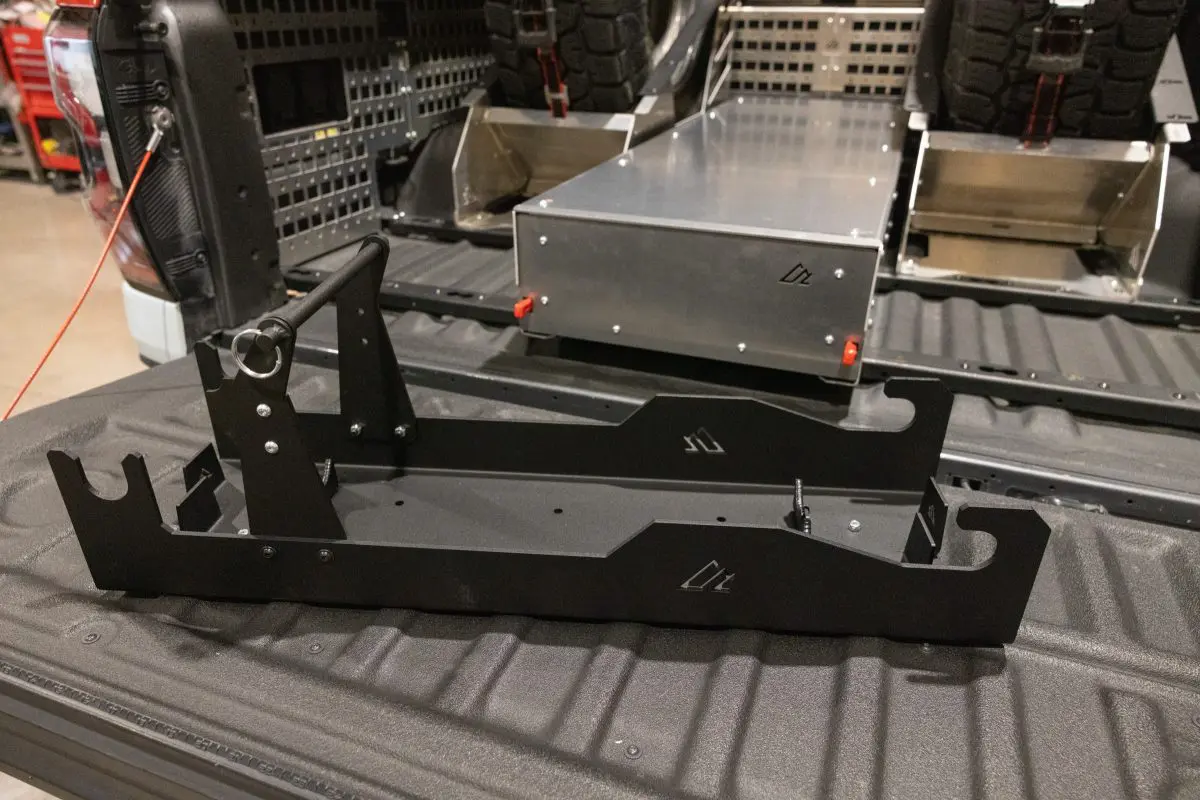
Our Badland Jack Mount – 3 Ton brings the jack retainers and handle storage together around a formed aluminum cradle. At approximately 9 lb, including the lock pin and hardware, the mount keeps its own contribution to your cargo weight in check.
Start With the Right Jack
This mount is designed specifically for the Harbor Freight BADLAND 3-ton off-road jack. The 1.5-ton jack uses a different mount. If you carry the smaller version, read Mounting Your 1.5T BADLAND Jack for its mounting layout, handle storage, and retention details.
Aluminum Versus Steel: Weight You Carry Every Mile
Recovery gear earns its space by being useful. The mount still has to make sense when you add up everything else you carry. We build the main cradle from 3/16-inch 5052 aluminum, with formed sides that add rigidity and locate the jack.
Steel is denser than aluminum, so a steel mount built with the same volume of material adds more weight. Actual mount weights depend on the design, but choosing aluminum lets us build this dedicated cradle without the weight penalty of an equivalent-volume steel structure. Our complete mount weighs approximately 9 lb. When comparing alternatives, check the complete assembled weight, including retention hardware, rather than judging by the size of the base alone.
Trail Scratches Shouldn’t Start a Rust Project
Ordinary carbon-steel mounts rely on paint, powder coat, plating, or another protective finish to keep moisture away from the steel. When that protection wears through or gets chipped, exposed steel can develop red rust. Road salt and wet gear make those damaged spots worth watching.
Our 5052 aluminum cradle does not develop that red rust. Aluminum forms a protective oxide layer, so the material itself provides corrosion resistance in both the Raw/Unfinished and Textured Black versions. You don’t have to rely solely on an intact coating to protect the aluminum underneath.
Aluminum can still corrode, and the mount’s hardware needs care too. Rinse off salt, clear out trapped dirt, and inspect fasteners and contact points. The advantage is a corrosion-resistant aluminum cradle that avoids the familiar cycle of exposed carbon steel, red rust, and finish touch-ups.
Plan for Access With the Rig Packed
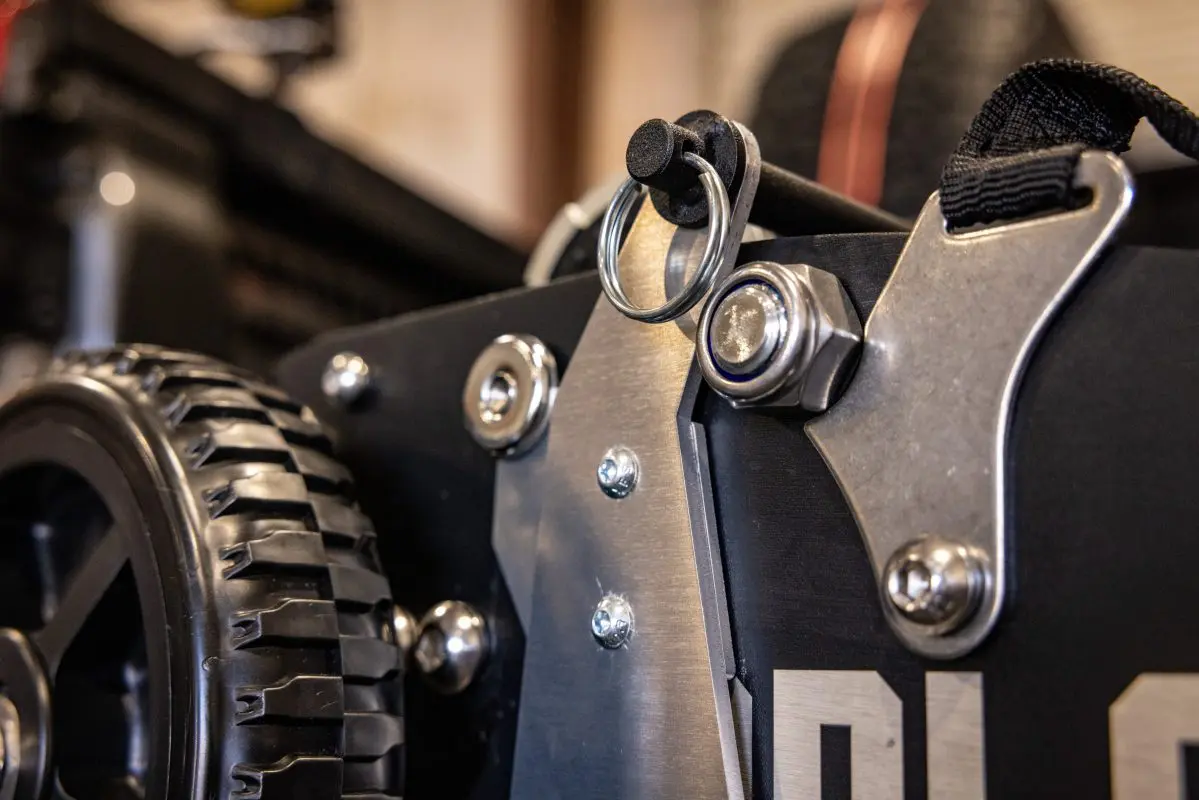
Mock up your mounting location with the fridge, cases, and other cargo in their usual positions. Leave room to reach the retaining pin, release the retainers, and lift the jack clear. Check the removal path as well as the parked footprint. A jack that fits perfectly but won’t come out has become a very committed passenger.
Choose a mounting surface and fasteners appropriate for transporting the jack and mount together. Check underneath before drilling, and confirm clearance around the actual 3-ton mount. The hole pattern, hardware specifications, and loading instructions for the 1.5-ton version do not establish the requirements for this larger mount.
Keep Both Handle Sections With the Jack
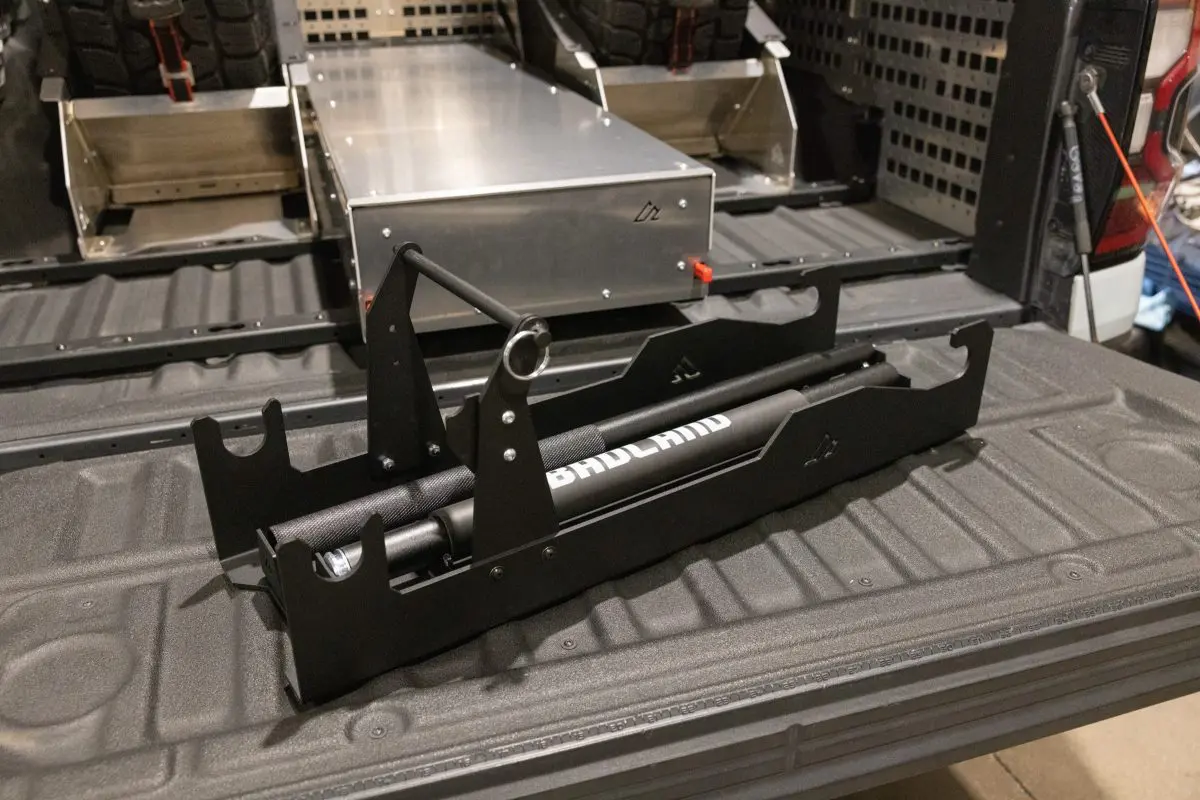
The front and rear handle brackets store both handle sections beneath the jack. Allow access to those brackets when planning the layout so you can collect the handles when you remove the jack.
Check Retention Before You Drive
After seating the jack, check the jack-retainer tabs, lock-pin assembly, and Allen-release tab. Keep these points accessible for inspection and removal. The retaining assembly accepts an optional padlock for theft deterrence; the padlock is sold separately.
Practice removing and reloading the jack with your cargo in place. Before driving, check the mounting fasteners and retention hardware, then recheck after rough travel. Follow Harbor Freight’s instructions for lifting and operating the jack.
See the 3-Ton Badland Jack Mount for finish options and product details. Carrying the smaller jack? Our 1.5T mounting guide covers that model’s setup.