Do the messy work where the sink lives. Pack food for the meals you'll actually cook, leave bulky packaging at home and give leftovers a breakfast plan.
For vehicle camping with a reliable cooler or fridge.
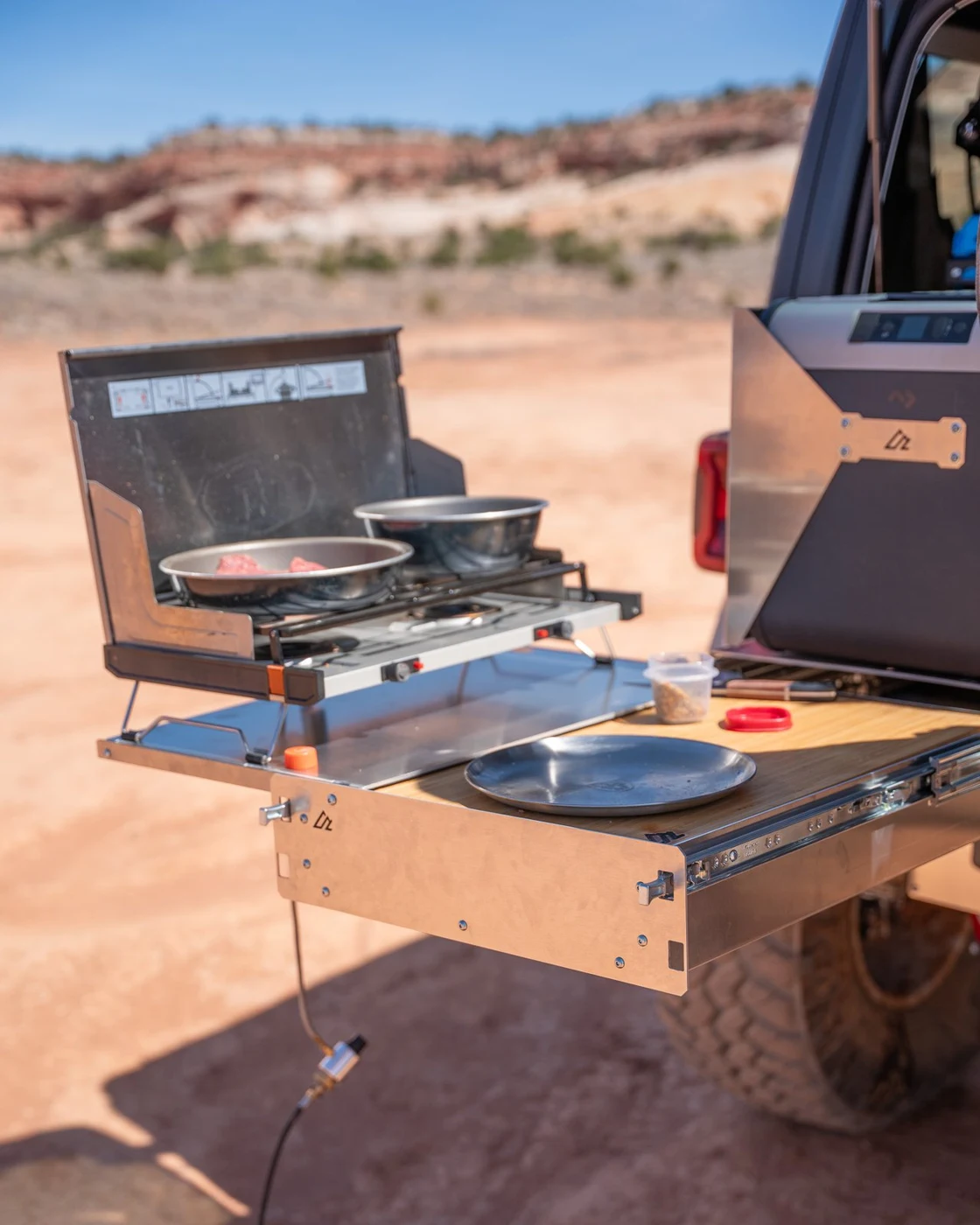
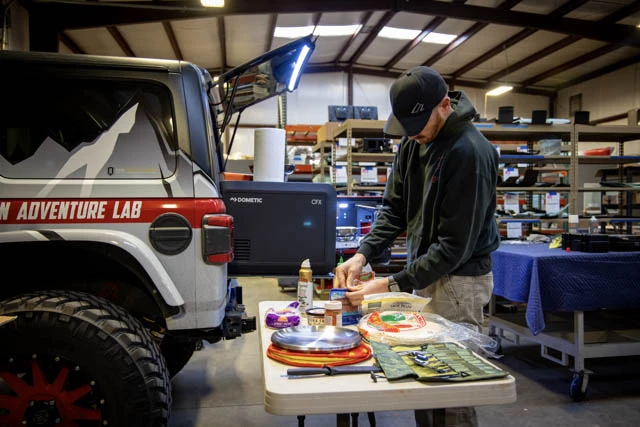
Less rummaging. More dinner. An AAL camp kitchen, ready for dinner.
PREP AT HOME✦PACK LESS TRASH✦BREAKFAST HAS POTENTIAL
BEFORE THE WHEELS TURN
How to Pack Your Meals.
One short routine. Fewer chores at camp.
01 / PLAN THE CROSSOVER
Give Ingredients Two Jobs.
Count people and meals first. Choose ingredients that work twice: tortillas for dinner and breakfast, onions for pico and eggs, steak tonight and a breakfast scramble tomorrow.
Plan a modest spare meal from shelf-stable food. Don't fill the cooler with a week's worth of optimistic leftovers.
02 / USE THE HOME SINK
Chop Now. Relax Later.
Wash produce, chop onions, shred cheese and mix sauces at home. Cook rice and other planned fillings ahead, then chill them promptly in shallow containers before packing.
For the Happy Camper, buy fully cooked chicken. Pack toppings separately so hot fillings can be reheated without warming the pico, guacamole or crema.
03 / PORTION BY MEAL
One Bag. Several Happy Humans.
Pack enough for everyone eating that meal in one sturdy food-safe zip-top bag or reusable container. Four servings of cheese can share a bag. They won't argue about legroom.
Flatten suitable bagged foods, press out excess air and leave room for expansion if freezing. Separate later meals so the entire supply doesn't keep coming out of the cooler.
04 / LEAVE THE GLASS
The Salsa Jar Stays Home.
Transfer what you'll use from glass bottles and jars into clean, food-safe, leakproof reusable tubs or squeeze bottles. Keep original packaging for anything that needs it; don't use mystery containers.
Label the contents, prep or opening date, serving count and intended meal. Photograph package directions, allergens and use-by dates before recycling the packaging. Repacking doesn't extend shelf life.
05 / BUILD A COLD SYSTEM
Chill Before You Roll.
Pre-chill the cooler and load already-cold food with enough ice or frozen packs. Keep perishables at 40°F or below, verified with a cooler or fridge thermometer. Keep the cooler shaded and openings brief.
Use sealed containers to keep food out of meltwater. Any raw meat goes in its own leakproof container below ready-to-eat food. Put the first meal within easy reach; a separate drinks cooler cuts food-cooler traffic.
06 / PACK THE RETURN TRIP
Leave Room for Leftovers.
Bring a couple of empty, shallow reusable containers, a marker and a dedicated bag or bin for dirty dishes. Nest containers when empty. Reuse durable food bags only when their maker permits it; discard bags that held raw meat.
Pack reusable plates, mugs and utensils, plus a scraper, wash basin, soap, potable water and a sealed trash bag. A small cleanup kit beats a large pile of regrets.
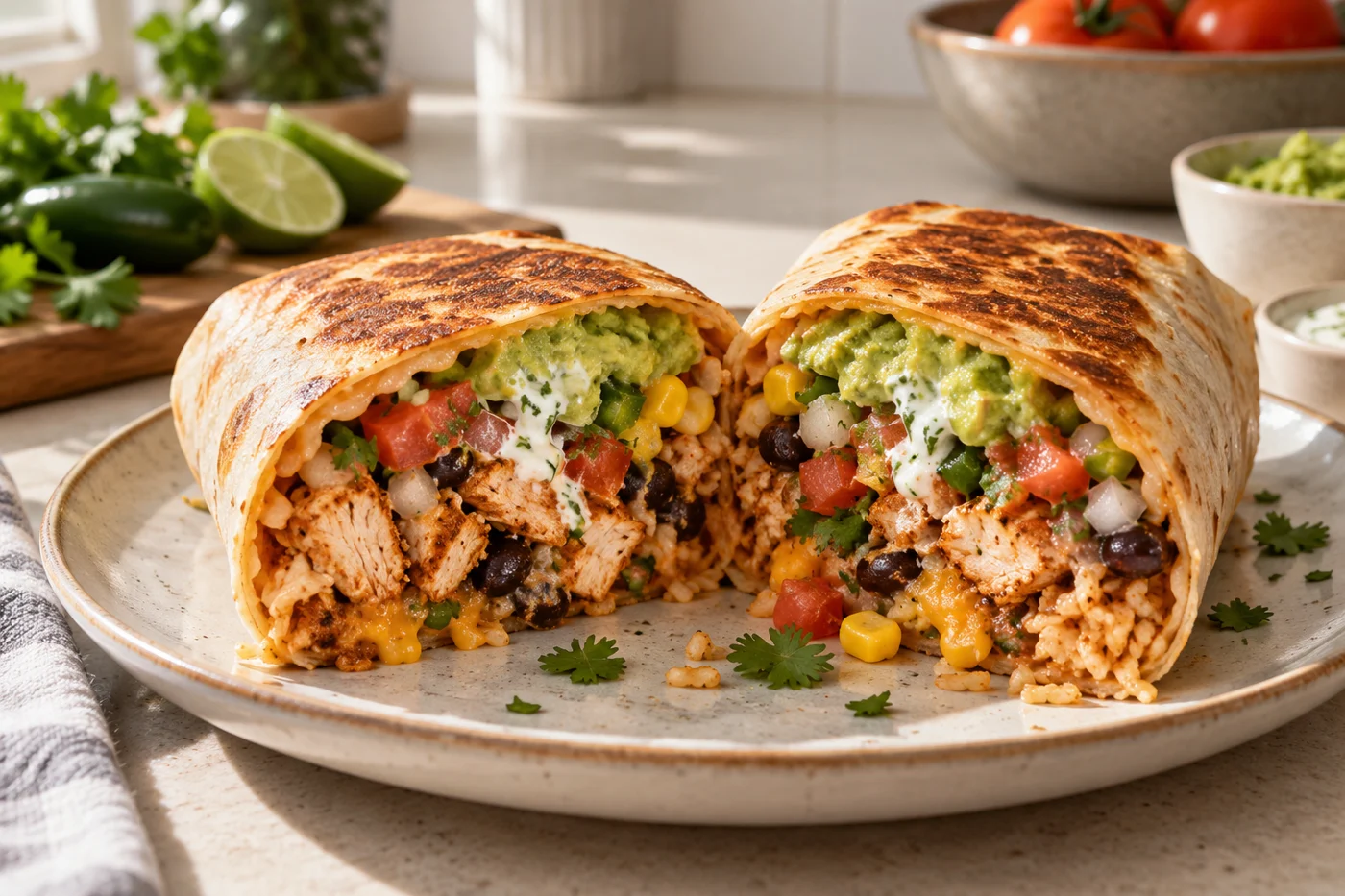
THE HAPPY CAMPER / FOUR BURRITOS
A Cooler That Makes Sense.
Pack the recipe quantities together by job. Keep ingredients in their own sealed containers inside each meal kit.
Hot-fillings kit: Fully cooked chicken, cooked rice, beans and corn, each separate for reheating.
Cold-toppings kit: Cheese, drained pico, guacamole, crema and jalapenos. Keep chilled until assembly.
Dry kit: Tortillas protected from crushing, seasonings and a little oil.
Tomorrow kit: An empty shallow container for a clean portion of cooked filling. Add eggs and extra tortillas to the plan if breakfast burritos are on the menu.
LEFTOVERS WITH A PURPOSE
Dinner Gets an Encore.
Save a portion before serving. Breakfast will thank you.
Steak + Eggs
Set aside a clean portion of cooked steak before dinner hits everyone's plates. Chill promptly. Next morning, dice it and reheat to 165°F, then fold into fully cooked scrambled eggs. Add onions, cheese or a tortilla.
A steak breakfast is a rare opportunity. Cook the eggs thoroughly anyway.
Burrito Filling, Round Two
Keep saved chicken, beans, rice and corn separate from the cold toppings. Reheat only the portion you need to 165°F. Add fresh eggs or tuck into another tortilla; spoon on cold toppings just before eating.
Saving the filling separately is easier to reheat and keeps tomorrow's tortilla from getting soggy.
Save It Safely
Divide leftovers into small, shallow containers and chill promptly. Don't leave dinner out to cool on the table. Have enough cooling capacity to handle leftovers without warming the rest of the cooler.
Discard perishables left out more than 2 hours total, or 1 hour above 90°F. Use refrigerated leftovers within 3-4 days of original cooking, or sooner if the package says so. Reheating doesn't restart the clock. If cold storage failed or you don't know the history, discard it.
LESS WASTE / LESS WASHING
Clean as You Cook.
Measure at home and cook in one skillet where the recipe allows. Keep raw-food tools separate from ready-to-eat food.
Use a clean serving spoon to portion food, then put the main supply back in the cooler.
Scrape food into your trash before washing. Wash, rinse and sanitize dishes using potable water and the sanitizer's directions; let them air dry.
Strain dishwater and pack out the food scraps. Use designated disposal facilities and follow local rules. Soap, including biodegradable soap, stays out of streams and lakes.
Pack out packaging and food scraps. Store food, dirty dishes and trash as local wildlife rules require. A sealed bag or ordinary cooler is not bear-resistant storage.