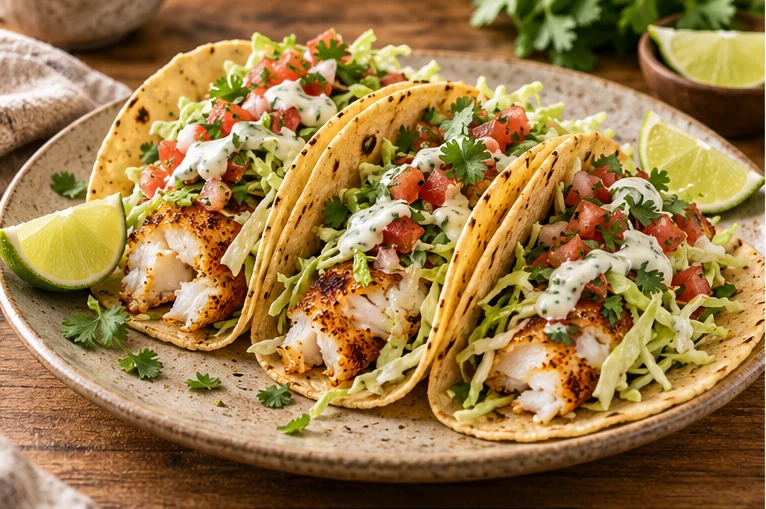
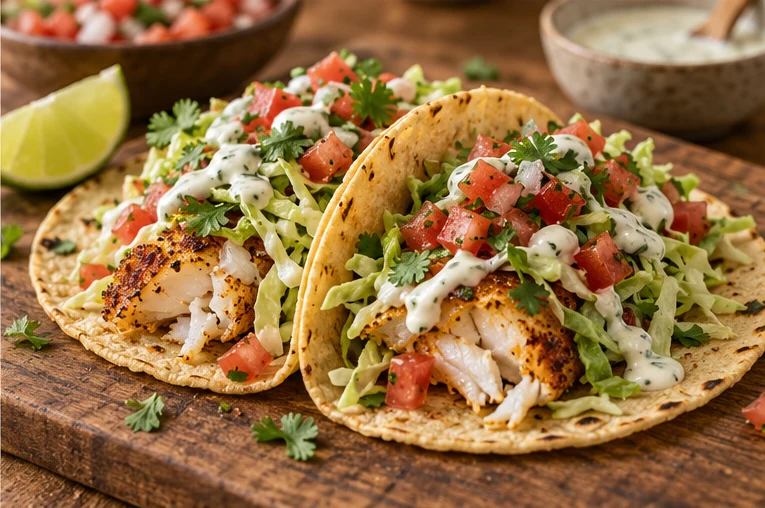
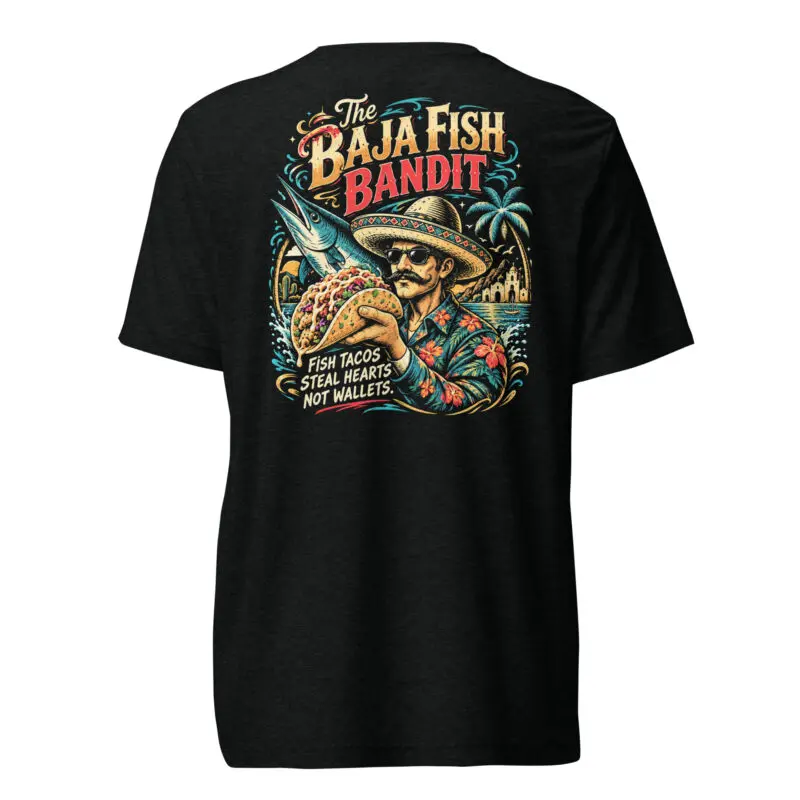
Skillet-seared white fish, crunchy cabbage, white-onion pico and lime crema on warm corn tortillas. Baja-inspired, without a pot of frying oil to haul home. These tacos steal hearts. Not wallets.
Food photos are generated illustrations. Recipe timing is an estimate.
SKILLET SEARED✦BIG FLAVOR✦SMALL CAMP KITCHEN
THE CAMP-DINNER PLAN
Skip the Fryer.
Prep the seasoning, cabbage, pico and crema at home; cook the fish at camp. Use thawed boneless cod, tilapia or pollock and sear it just before eating. Plan tacos early in the trip, with reliable cold storage. No long marinade and no extra cooling-and-reheating cycle.
GROCERY-STORE SHORTCUTS
Shop Smart. Check the Label.
Our default is plain white fish cooked at camp, with toppings and seasoning prepped at home. The packaged options below are alternatives: frozen battered fish needs its own cooking equipment and directions; the ready-to-eat tuna pouch makes a different taco.
Target / UNCOOKED / OVEN OR AIR FRYER
Gorton's Beer Battered Fish Fillets, 18.2 oz
A crispy taco variation, not the plain-fillet skillet recipe. Needs full cooking from frozen under its package oven or air-fryer directions. Choose it only if your camp setup can follow those directions; do not substitute a quick skillet warm-up.
Whole-fillet Alaska pollock with breading. Designed to cook from frozen. Follow the package cooking method and temperature; choose it only if you can keep it frozen and use the required equipment. This makes a breaded taco variation.
Ready-to-eat seasoned tuna, not Baja white fish. Use for a no-cook taco backup with the same cabbage, pico and crema. Six pouches give 15.6 oz; divide among eight tacos. Skip the raw-fish cooking steps and spice rub.
Our pick: prep at home, cook the fish at camp. Keep plain raw fillets sealed below ready-to-eat food at 40 F or below, verified with a thermometer, and cook within 1-2 days after refrigerator thawing. Cook the thickest part to 145 F just before assembling the tacos. Packaged battered fish may require 165 F and cooking from frozen; follow its label and use only equipment it provides directions for. If reliable cold storage is unavailable, choose another meal. Reheating cannot reliably make temperature-abused food safe.
Use cooked leftovers within 3-4 days of original cooking, or sooner under the label. Keep all opened fish and perishable toppings cold; only unopened shelf-stable pouches can stay outside the cooler. Never heat a pouch unless its label permits it. Product allergens vary, especially with batter. Store selection and prices vary.
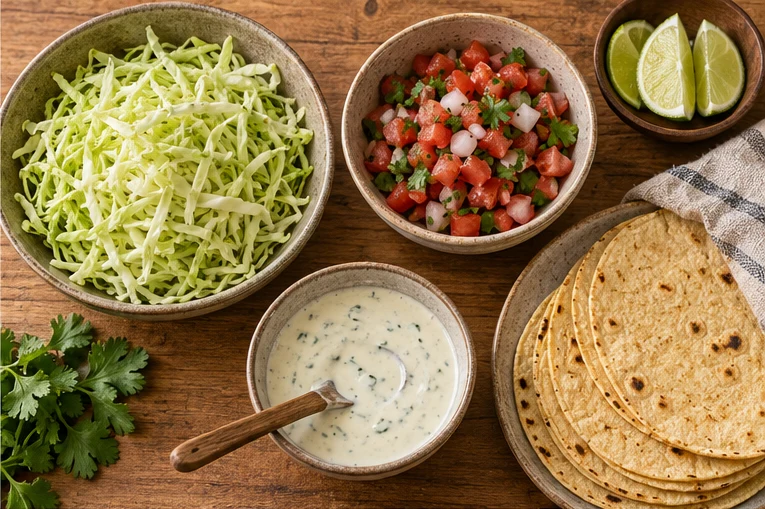
Use the listed tomato, white onion and cilantro for pico; toss with 1 tsp lime juice and a pinch of salt, then drain. Mix the listed crema with 1-1/2 tsp lime juice and a pinch of salt; thin with a little water if needed. Toss cabbage with 2 tsp lime juice and a pinch of salt just before serving. Keep toppings chilled. Cut the remaining lime into wedges.
02 / THE METHOD
Season the Catch.
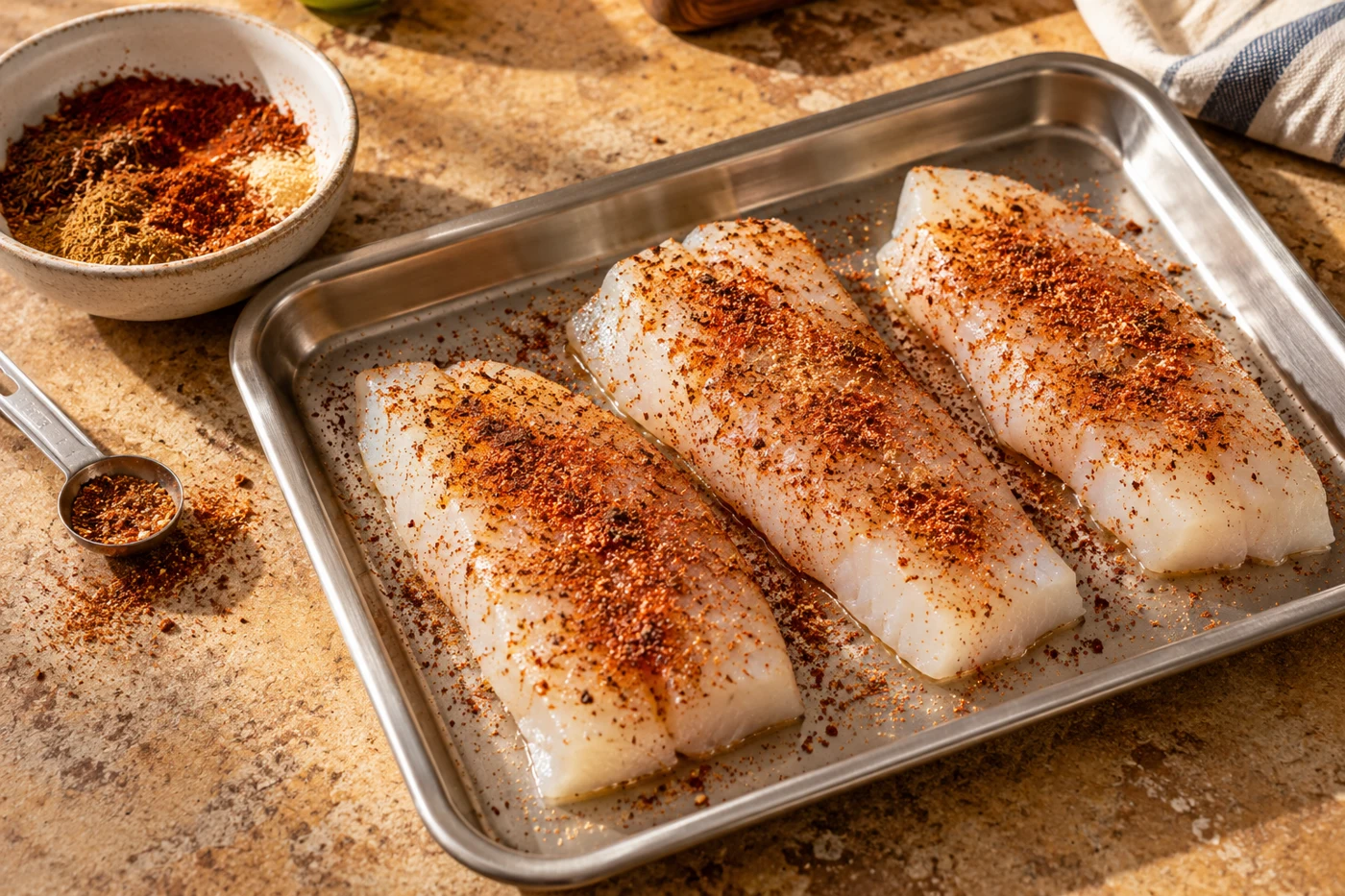
Keep raw fish separate from toppings. Pat thawed fillets dry, check for bones and cut into manageable pieces of similar thickness. Mix the listed chili powder, cumin, smoked paprika, garlic powder and fish salt; coat both sides. Wash hands, board and utensils after raw-fish contact. Use a clean plate for cooked fish.
03 / THE METHOD
Give It Some Skillet Time.
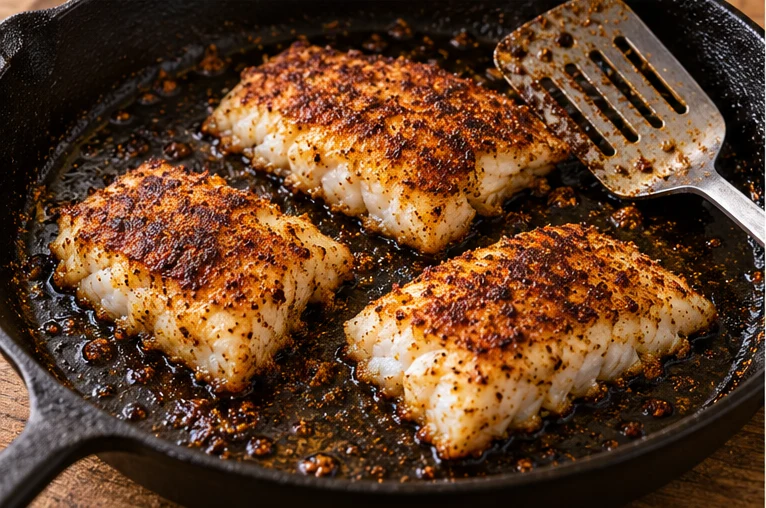
Heat the listed oil in a skillet over medium-high. Add fish without crowding and cook about 3-4 minutes on the first side, then turn carefully and cook 2-4 minutes more. Timing varies with thickness; lower heat if spices burn. Check the thickest part reaches 145 F with a food thermometer. Transfer to a clean plate and flake into large pieces. Work in batches rather than crowding the pan.
04 / THE METHOD
Assemble the Evidence.
In a separate dry skillet, or the cleaned fish skillet, warm tortillas for 15-30 seconds per side until flexible. Stack under a clean towel. Divide the cooked fish evenly among the tortillas, then add about 1/4 cup cabbage per taco, a spoonful of drained pico and a light drizzle of crema. Serve immediately with cilantro and lime. Makes 2 tacos per person; add a side for bigger appetites. Taco 'bout a clean getaway.
BEFORE YOU LEAVE
Prep Where the Sink Lives.
Thaw fish in the refrigerator and follow its package instructions; remove it from reduced-oxygen or vacuum packaging before thawing when the label requires. Keep raw fish in a leakproof container below ready-to-eat food at 40 F or below and use within 1-2 days after thawing, or sooner if the label says. Pack cabbage, pico and crema separately; mix dry seasoning at home. Never thaw fish on the dashboard.
Dinner Gets an Encore.
Cook only what you need when practical. Save cooked fish separately from tortillas and toppings, then chill promptly in a shallow container. Reheat saved fish to 165 F for next-day tacos or a rice bowl. Dress only the cabbage you will eat so the rest stays crisp.
Keep perishables at 40 F or below and use a cooler thermometer. Wash hands and utensils with soap and potable water. Chill leftovers promptly in small, shallow containers with enough cooling capacity. Discard perishables left out more than 2 hours total, or 1 hour above 90 F. Use refrigerated leftovers within 3-4 days of original cooking, or sooner under the label; reheating does not restart the clock. Reheating cannot reliably rescue food kept too warm.