
Latest News
Alpine Loop Trail in a Ford Ranger Raptor: Too Early for Colorado’s Epic 4WD Adventure?
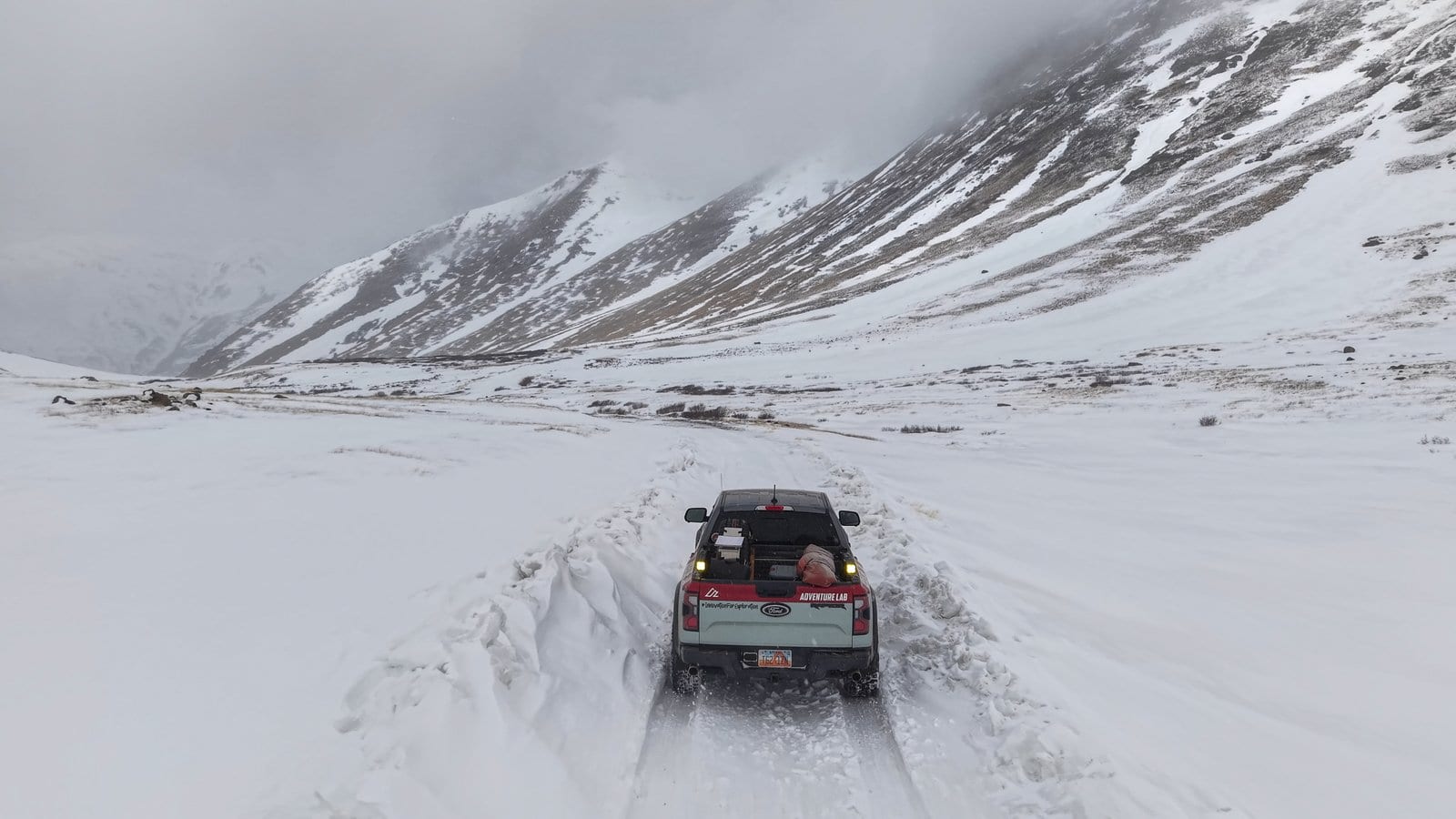
When Colorado’s legendary Alpine Loop Trail showed “Open” status on Thursday, we knew we had to seize the moment. This iconic high-altitude 4WD adventure connects three historic mining towns across some of the most spectacular terrain in the San Juan Mountains. But sometimes being first on the trail comes with unexpected challenges – like finding out that “open” doesn’t always mean passable, especially when fresh snow blankets the peaks.
What Is the Alpine Loop Trail?
The Alpine Loop is a spectacular 65-mile backcountry byway that connects the historic mining towns of Lake City, Silverton, and Ouray through the heart of the San Juan Mountains. This isn’t your typical Sunday drive – it’s a serious 4WD adventure that crosses three major mountain passes: Engineer Pass (12,800 feet), Cinnamon Pass (12,640 feet), and Imogene Pass (13,114 feet).
The trail showcases Colorado’s mining heritage while delivering some of the most breathtaking alpine scenery in the lower 48. Ghost towns, abandoned mines, and remnants of the Colorado Silver Boom dot the landscape, making this as much a history lesson as an off-road adventure.
Alpine Loop Trail Statistics
| Total Distance: | 65 miles (full loop) |
| Highest Point: | 13,114 feet (Imogene Pass) |
| Total Elevation Gain: | ~8,000 feet |
| Difficulty Rating: | Moderate to Difficult |
| Season: | Typically June through October |
| Vehicle Requirements: | High-clearance 4WD required |
| Key Passes: | Engineer (12,800′), Cinnamon (12,640′), Imogene (13,114′) |
Essential Alpine Loop Resources
Before attempting the Alpine Loop, these resources are absolutely critical for planning and safety:
- Alpine Loop Info – The definitive source for real-time trail conditions, pass status, and weather updates. This should be your first stop for current conditions.
- Colorado Department of Transportation – Official byway information including regulations, safety tips, and seasonal closure updates from CDOT.
- AllTrails Alpine Loop – Community-driven trail reports, GPS tracks, and recent user experiences with photos and conditions.
- Bureau of Land Management – Land management information, camping regulations, and Leave No Trace guidelines for the BLM sections.
- TripAdvisor Reviews – Tourist perspectives and tips from visitors who’ve completed the loop, including timing and preparation advice.
- Official Alpine Loop Map (PDF) – Downloadable trail map showing the complete route, key landmarks, and important waypoints.
Thursday Night Planning: When “Open” Means Go Time
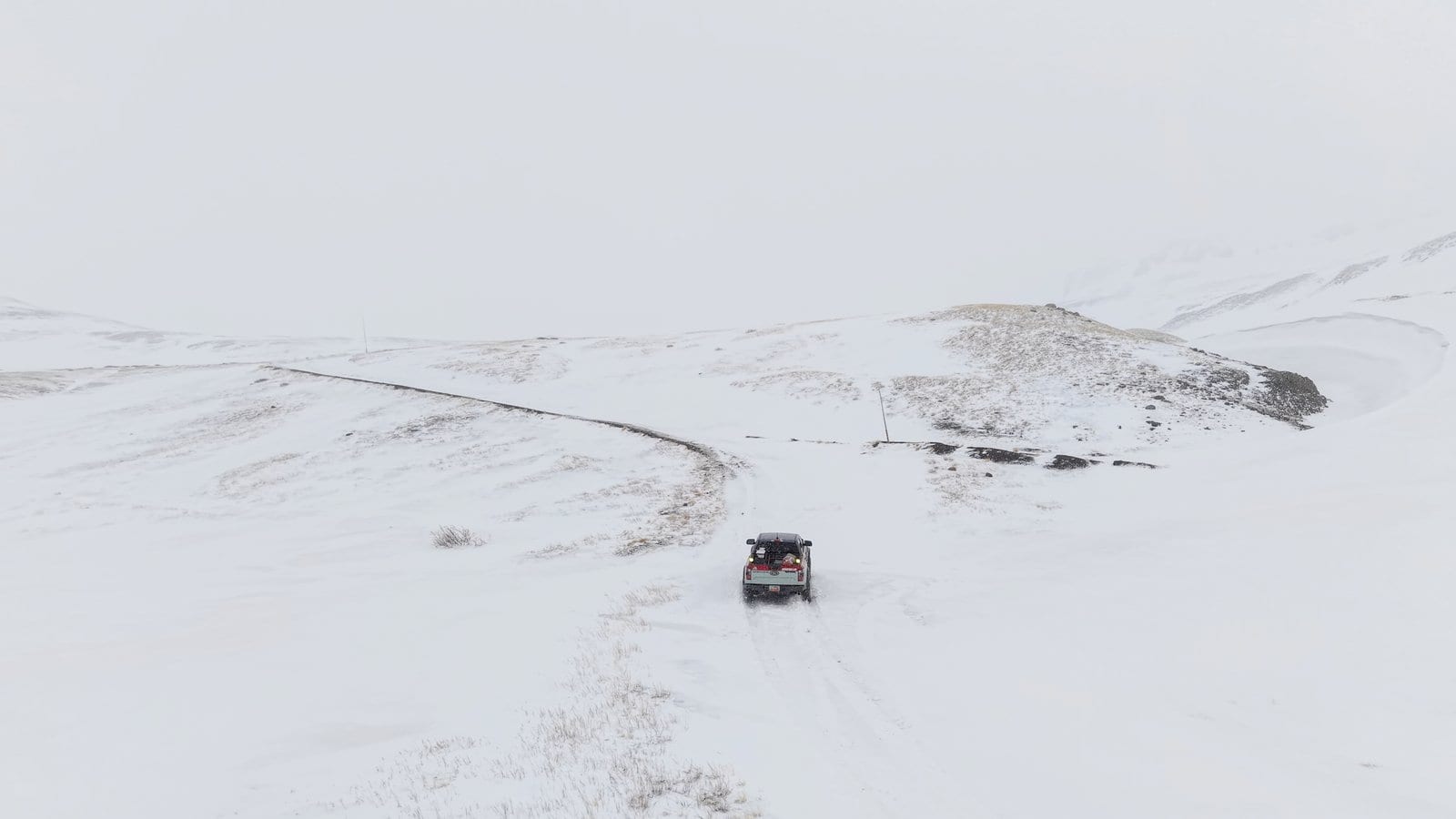
The Alpine Loop typically opens sometime in June, but the exact timing depends on snowpack and weather conditions. When we checked Alpine Loop Info Thursday evening and saw “Open” status with favorable morning weather, the decision was easy – we’d hit the trail early Friday morning.
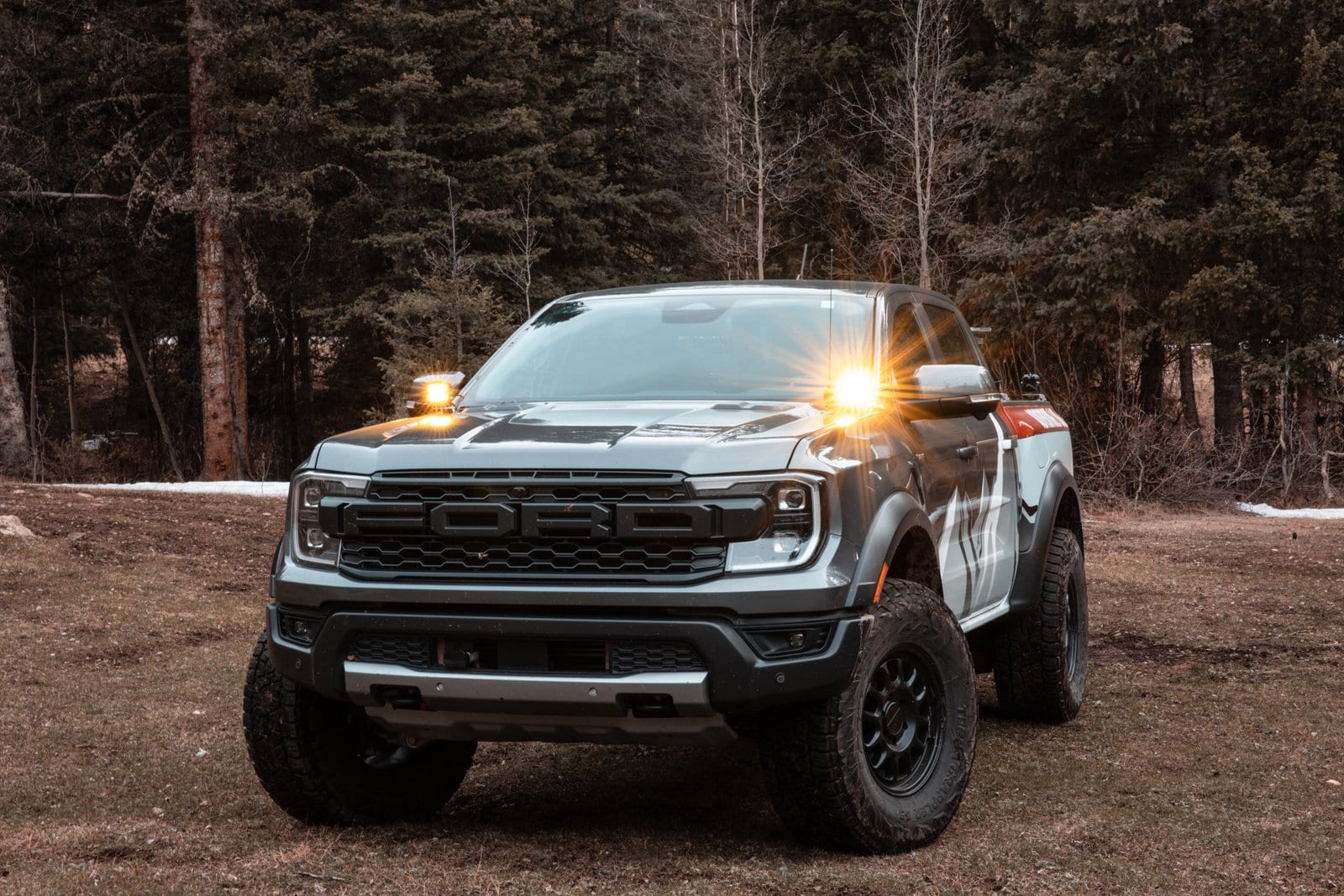
Our Ford Ranger Raptor was already equipped with American Adventure Lab’s complete overland setup, including our Ford Ranger Bed Attachment System – BASE for organized gear storage and the Ford Ranger A-Pillar Light Brackets mounted with high-output LED pods for early morning and late evening visibility.
The beauty of having a well-sorted overland rig is the ability to make these spontaneous decisions. With our Ford Ranger Rear Seat Delete maximizing interior storage and the Ford Ranger Sidekick Accessory Mount keeping essential recovery gear accessible, we were ready to roll with minimal prep time.
Friday Night Snow: Nature’s Plot Twist
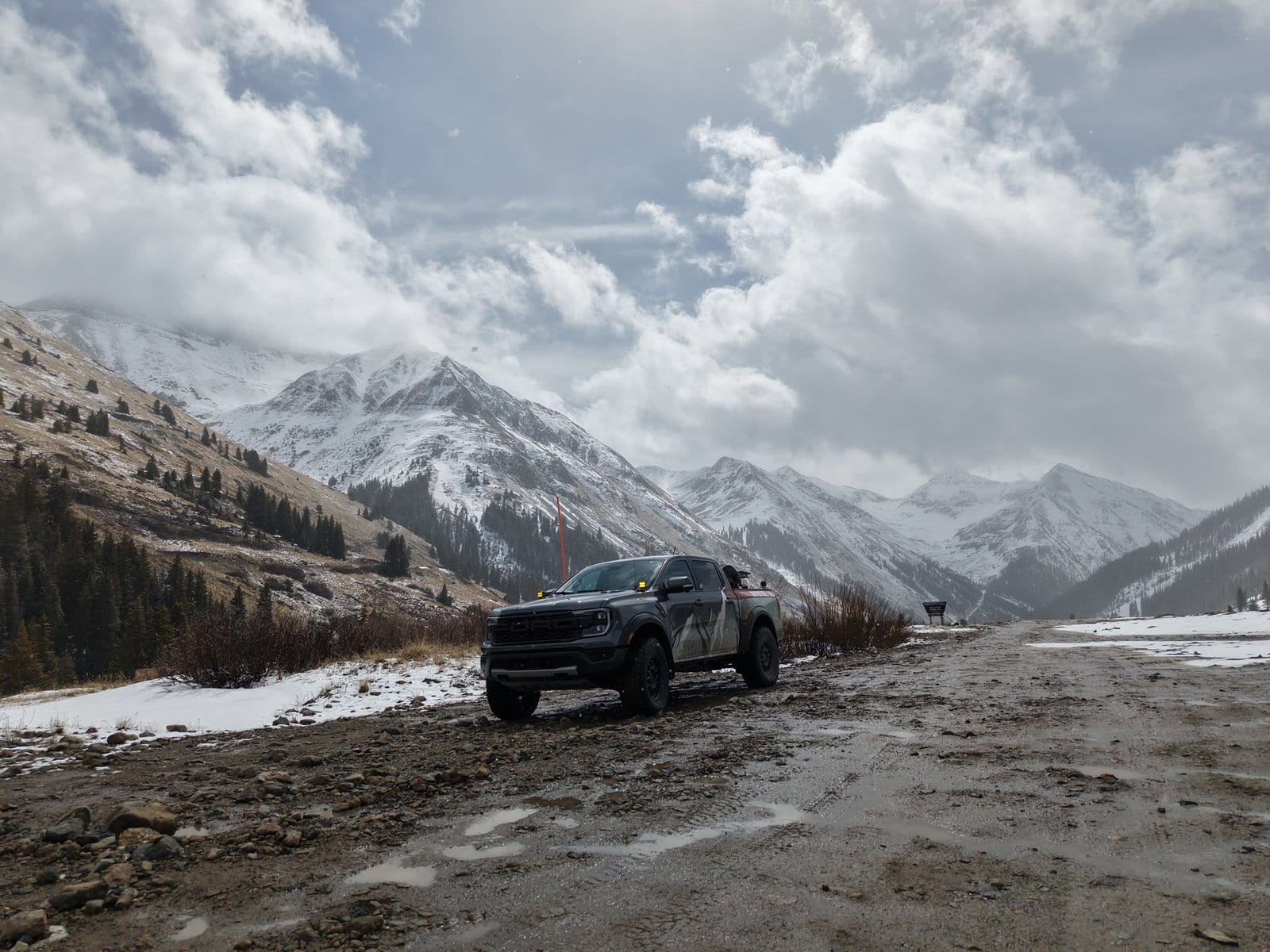
Sometimes the mountains have other plans. Despite the favorable forecast, Friday night brought steady snowfall across the San Juan Mountains. We watched from our camp as fresh powder accumulated, knowing Saturday would present a very different challenge than originally anticipated.
This is exactly why we test our gear in real-world conditions rather than just sunny summer days. Our Ford Ranger Bedside LED Light Bracket Full Set proved invaluable for camp setup and gear organization in the low-light, snowy conditions. The brackets positioned our LED panels perfectly for functional work lighting without creating blinding glare off the snow.
Saturday Reality Check: When Passes Close Overnight
Saturday morning revealed a winter wonderland – beautiful, but challenging. The fresh snowfall had created hazardous conditions near the peaks, particularly around Cinnamon Pass where snow depths increased dramatically with elevation. While lower elevations remained manageable, the high passes were effectively impassable.
This is the reality of early-season alpine adventures. Trail status can change overnight, and what shows as “open” on Thursday might be effectively closed by Saturday morning due to fresh snow, washouts, or other hazards. The key is having the experience and equipment to adapt safely.
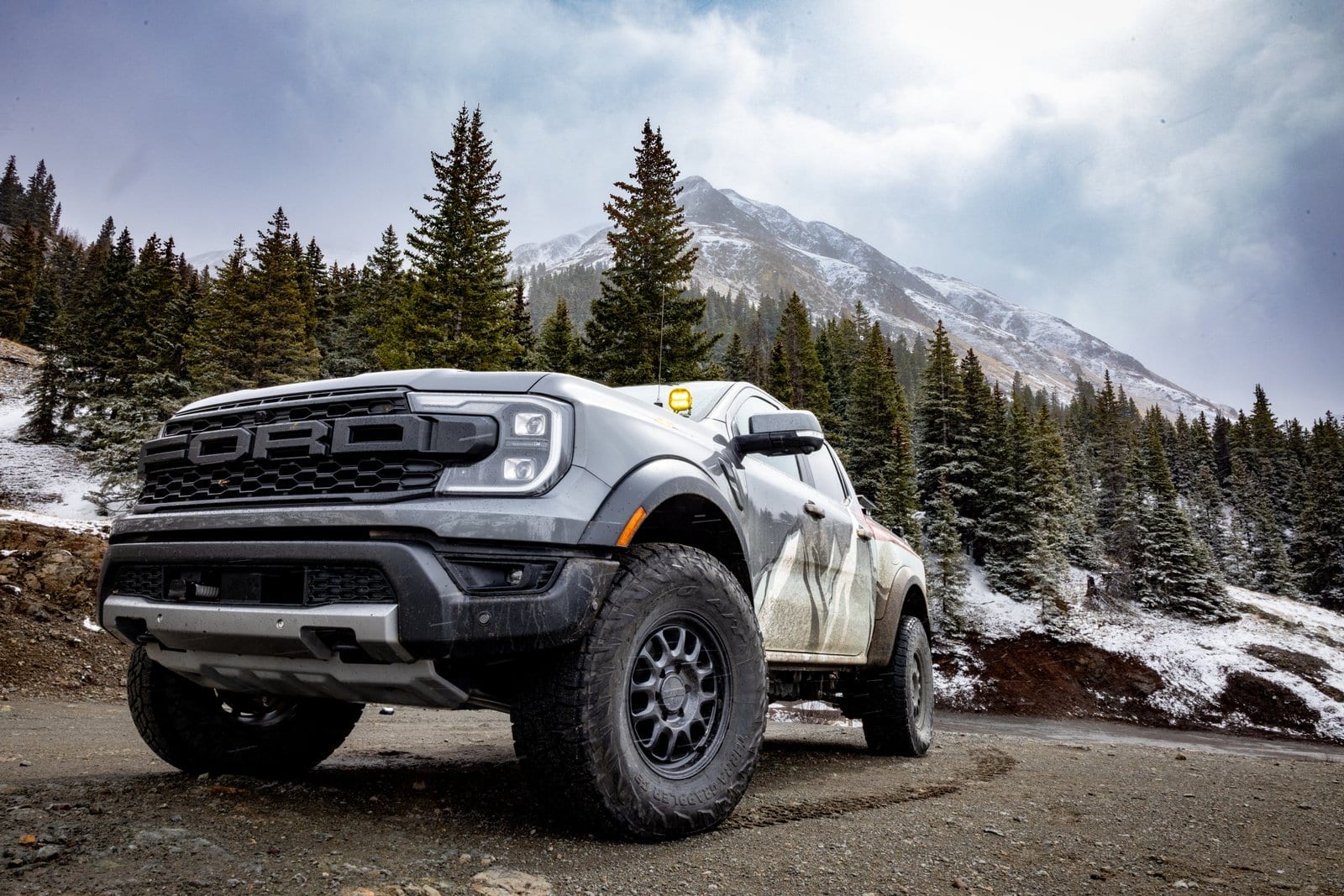
Our prototype Ranger Vertical Spare Tire Mount performed flawlessly throughout the challenging conditions, maintaining secure tire storage even on steep, snow-covered terrain. These real-world testing scenarios are exactly why we develop and refine our products – because gear that works in a parking lot might fail when you actually need it in the backcountry.
Testing Gear in Extreme Conditions
While we didn’t complete the full Alpine Loop, the trip provided invaluable testing opportunities for both released and prototype products. The Ford Ranger Trailer Plug Tuck Kit kept electrical connections protected from snow and mud, while our bed attachment system allowed quick access to recovery gear and camp equipment despite the challenging conditions.
These aren’t just products we design and forget – they’re systems we continuously refine based on real-world use. Every trip provides data points that improve future iterations and inform new product development. That’s the advantage of gear developed by people who actually use it in the field.
Early Season Adventures: Worth the Risk?
Attempting the Alpine Loop this early in the season was ambitious, perhaps overly so. But there’s something magical about seeing the San Juan Mountains still cloaked in winter snow, knowing that by mid-summer, much of that white will be gone. These brief windows offer unique photographic opportunities and remind us why we’re drawn to high-altitude adventures.
The disappointment of not completing the full loop was offset by the experience of camping in fresh snow, testing gear in challenging conditions, and witnessing the mountains in their transitional spring state. Not every adventure goes according to plan – sometimes that’s when you learn the most.
Planning Your Alpine Loop Adventure
If you’re planning to tackle the Alpine Loop, learn from our early-season experience:
- Check conditions obsessively: Alpine Loop Info should be bookmarked and checked daily as your trip approaches
- Have backup plans: Early season conditions can change rapidly; plan alternative routes and activities
- Carry proper recovery gear: Winches, tow straps, and traction aids aren’t optional in variable conditions
- Inform others of your plans: Cell coverage is spotty; leave detailed itineraries with reliable contacts
- Start early in the day: Afternoon thunderstorms are common in summer; morning starts provide better weather windows
Next Steps: Return Trip Planning
We’ll definitely be back to complete the full Alpine Loop once conditions stabilize. Keep an eye on our YouTube channel for the complete video documentation of this attempt, including the challenges we faced and lessons learned. The full article with additional photos and technical details is available at American Adventure Lab.
The Alpine Loop represents everything we love about backcountry exploration – challenging terrain, rich history, spectacular scenery, and the constant reminder that nature sets the rules. Whether you’re running it in peak summer conditions or pushing the season like we did, it demands respect, preparation, and quality equipment.
Ready to build your own Alpine Loop-capable rig? Start with our proven Ford Ranger Bed Attachment System and work your way up to a complete overland setup. Because when the mountains call and the passes show “open,” you want to be ready to answer – even if the conditions have other plans.
Alpine Loop Frequently Asked Questions
Alpine Loop FAQ
What is the Alpine Loop Trail?
The Alpine Loop is a 65-mile backcountry byway through Colorado’s San Juan Mountains that connects the historic mining towns of Lake City, Silverton, and Ouray. It crosses three major passes (Engineer, Cinnamon, and Imogene) and showcases ghost towns, abandoned mines, and Silver Boom history along some of the most spectacular alpine scenery in the lower 48.
How long is the trail and what are the key stats?
- Total distance: 65 miles (full loop)
- Highest point: 13,114 ft (Imogene Pass)
- Elevation gain: ~8,000 ft
- Difficulty: Moderate to Difficult
- Passes: Engineer (12,800′), Cinnamon (12,640′), Imogene (13,114′)
When is the Alpine Loop open?
Typically June through October, but the exact opening depends on snowpack and weather. Even after the trail shows “Open,” early-season conditions can change overnight. Check alpineloop.info daily as your trip approaches.
What kind of vehicle do I need?
High-clearance 4WD is required. This is not a Sunday drive. The high passes involve technical terrain, and early or late season runs can add snow, mud, and washouts to the mix. Proper recovery gear (winch, tow straps, traction aids) is not optional.
What happened on this trip?
We saw “Open” status on Thursday evening and headed out Friday in the Ranger Raptor. Friday night brought steady snowfall across the San Juans, and by Saturday morning the high passes, especially Cinnamon, were effectively impassable. We didn’t finish the full loop, but we got a full field test of our gear in real winter conditions.
Which AAL gear was on the truck?
- Ranger Bed Attachment System (BASE)
- Ranger A-Pillar Light Brackets
- Ranger Rear Seat Delete
- Ranger Sidekick Accessory Mount
- Ranger Bedside LED Light Bracket Full Set
- Ranger Trailer Plug Tuck Kit
- Prototype Ranger Vertical Spare Tire Mount
Why attempt it so early in the season?
Early season windows offer unique photography and a chance to see the San Juans still cloaked in snow. It’s ambitious, and sometimes overly so, but real-world testing in variable conditions is how we refine product designs. Gear that works in a parking lot can fail when you actually need it in the backcountry.
What’s the best way to plan my own Alpine Loop trip?
- Check alpineloop.info obsessively as your trip approaches
- Have backup routes and activities, early season conditions change fast
- Carry proper recovery gear (winch, straps, traction aids)
- Leave a detailed itinerary with a reliable contact, cell coverage is spotty
- Start early, afternoon thunderstorms are common in summer
